
LESSON 7 – Sinus Rhythm: Definition and Diagnostic Criteria
Now we face a slightly more challenging task — determining the cardiac rhythm.
We have yet to study the most common types of arrhythmias, but first you must learn to distinguish sinus rhythm from “non-sinus rhythm”. This is one of the first questions you should ask yourself when interpreting an ECG. To do this, you need to memorize, write down (if necessary), or consult your reference sheet with the criteria of sinus rhythm.
Criteria for Sinus Rhythm
- In lead II, and usually also in leads I and aVF, there are positive P waves of identical morphology, located at a constant distance from the QRS complex in all consecutive cardiac cycles.
- The number of P waves equals the number of QRS complexes.
- Heart rate is between 60 and 100 beats per minute. Values below this range indicate sinus bradycardia, and values above it indicate sinus tachycardia.
- RR intervals are regular: variation between consecutive RR intervals does not exceed 10% of the mean RR interval duration, or < 120 ms.
Let us review an example
ECG 1.
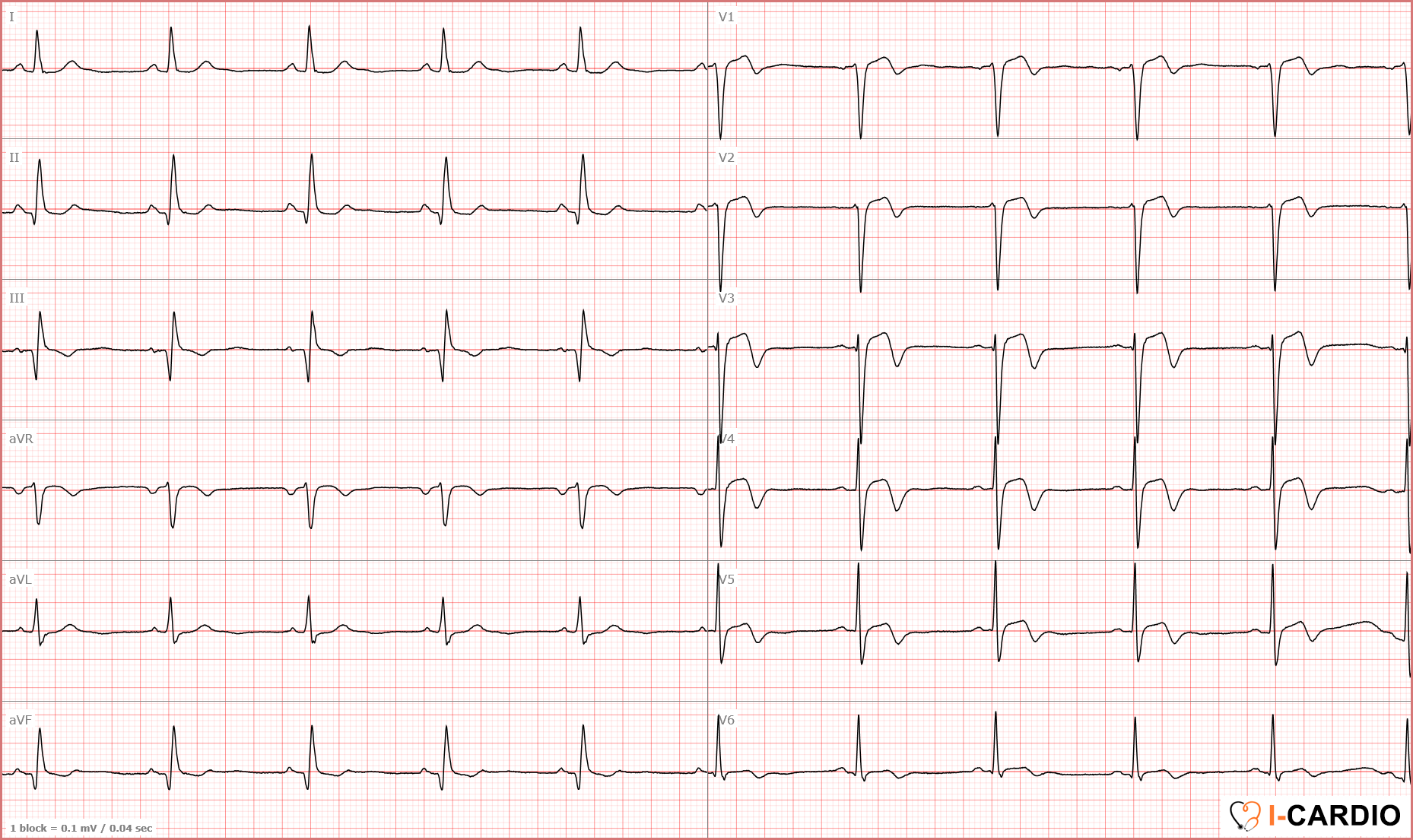
In lead II are positive P waves of identical morphology,
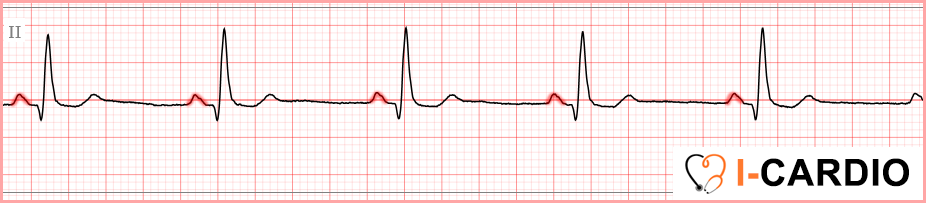
located at a constant distance from the QRS complex in all consecutive cardiac cycles. The number of P waves equals the number of QRS complexes.
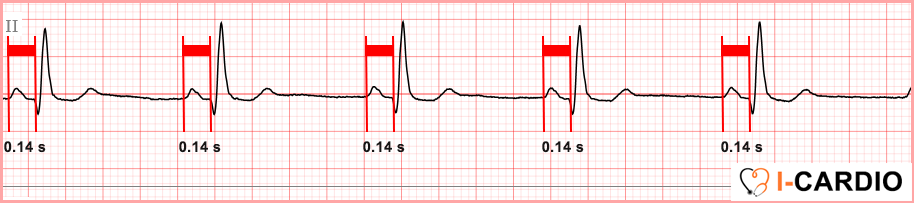
Heart rate 62 minute (1500/24 = 62,5). RR intervals are regular, or the variation between consecutive RR intervals does not exceed ±10% of the mean RR interval duration.
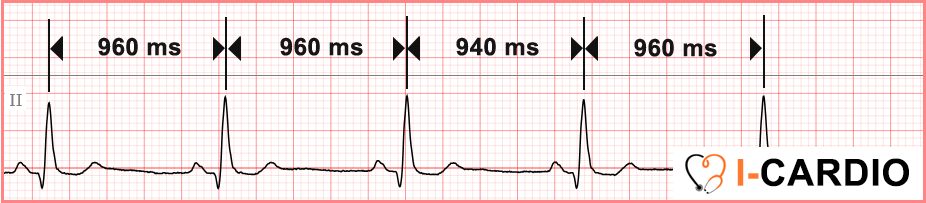
Thus, it can be concluded that this is a normal sinus rhythm. Let us consider another example.
ECG 2
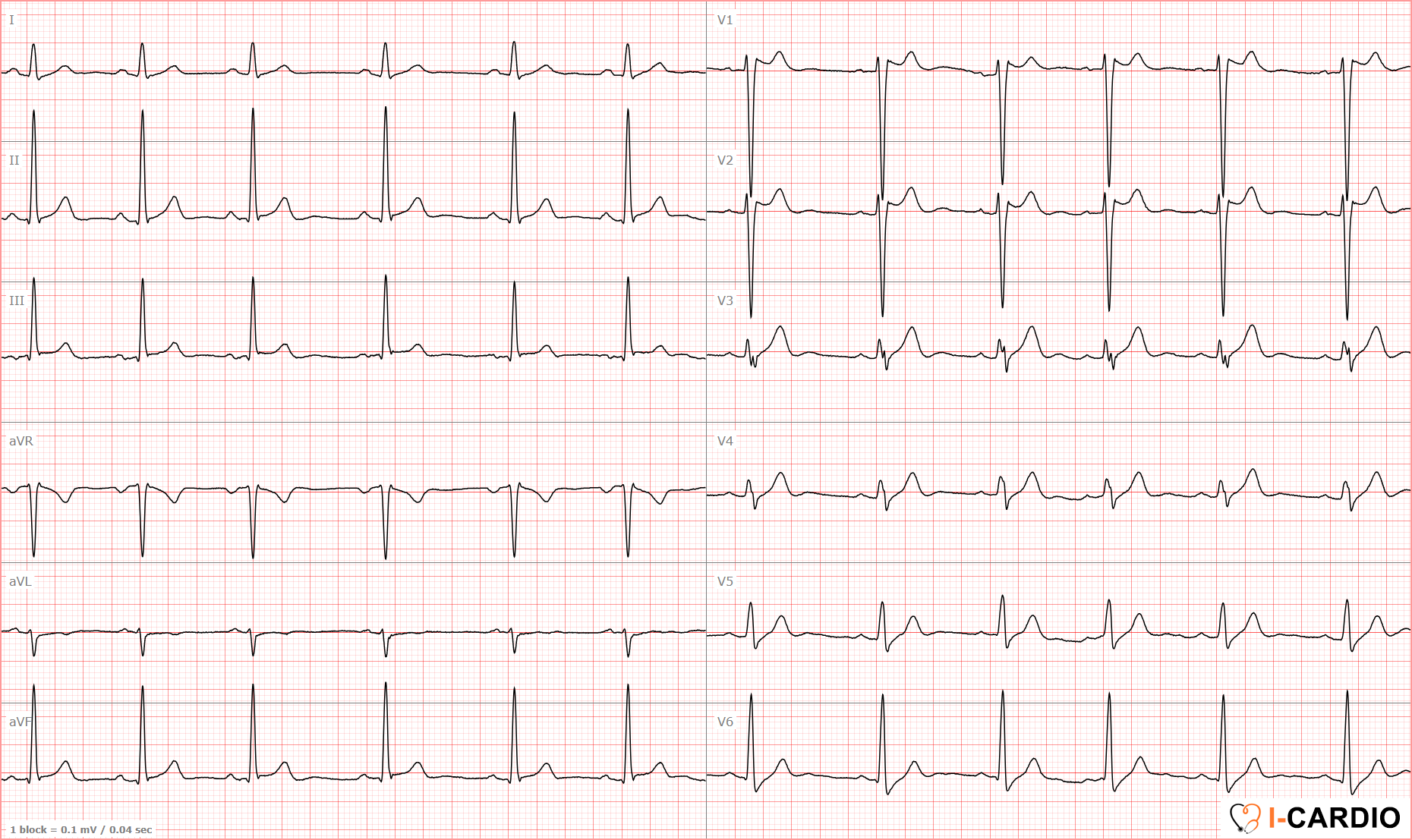
In lead II are positive P waves of identical morphology, located at a constant distance from the QRS complex in all consecutive cardiac cycles. The number of P waves equals the number of QRS complexes.
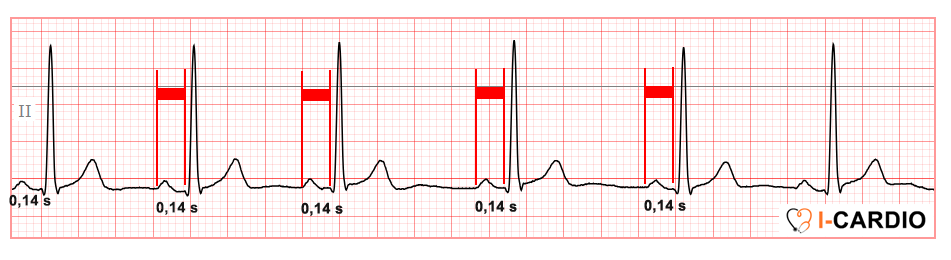
The average heart rate calculated using 5 cardiac cycles is approximately 71 beats per minute. At first glance, this appears to be sinus rhythm. But what about rhythm regularity?
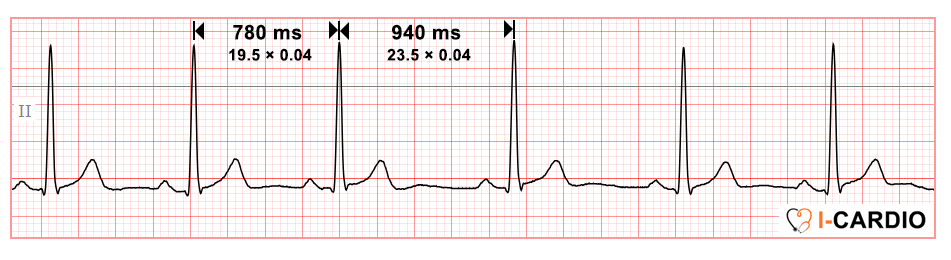
The difference between the longest and the shortest RR interval is 160 ms (940 vs 780 ms), corresponding to an RR variability of approximately 18.6%.
- Difference between RR intervals: 940 ms − 780 ms = 160 ms. (A normal value is less than 120 ms)
- Mean RR interval: (940 ms + 780 ms) / 2 = 860 ms. RR variability: (160 / 860) × 100 ≈ 18.6%. (normal value ≤ 10%)
Thus, the final criterion is not fulfilled. Therefore, despite the sinus node being the pacemaker, the rhythm cannot be considered normal sinus rhythm. This represents sinus arrhythmia.
I would like to reassure those who had difficulty assessing rhythm regularity. First, we will review everything in practice, and second, you will not make a significant mistake if you ignore this variation. It is not the most critical error in ECG interpretation.
At this stage, we have covered enough for you to begin independently determining the rhythm at a basic level — “sinus” vs “non-sinus.”